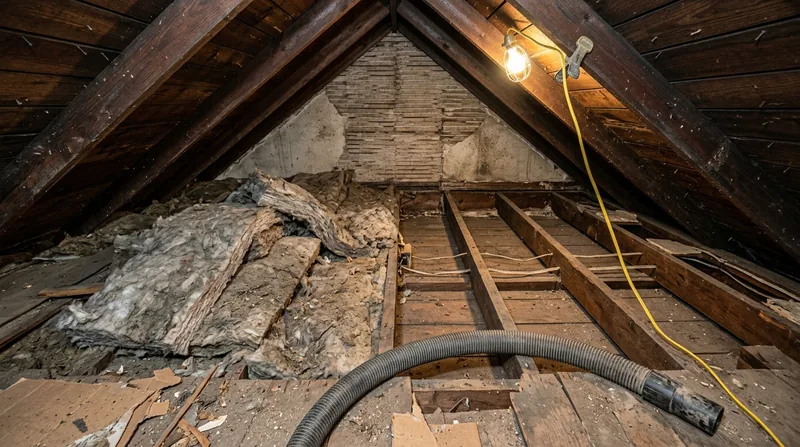




Insulation Removal in Iowa City is the necessary first step before any retrofit in homes where old fiberglass batts, mineral wool, or failed foam no longer performs. The Northside and Longfellow neighborhoods of Iowa City hold some of the oldest housing stock in Johnson County, with balloon-framed attics and rim joists packed with decades of settled insulation that has compressed, absorbed moisture, and lost R-value. Mid-century ranches across the county show thin original batts that no longer meet code or deliver comfort, and even newer homes sometimes need old foam stripped out before new spray foam goes in. We remove old insulation from attics, rim joists, walls, and crawl spaces, clearing the substrate clean so new foam can bond properly and deliver the air sealing and thermal performance your home needs. This work is often invisible but essential, and we handle it with the same care and attention we give to the spray foam installation that follows.
Why Old Insulation Fails in Iowa City Homes
Iowa City's climate is IECC zone 5A: cold, windy winters push heated air out through leaky attics and rim joists, while hot, humid summers drive moisture inward through walls and roof decks. Fiberglass batts settle over decades, leaving gaps above headers and cold spots above bedrooms. Older homes in rentals near the University of Iowa see high turnover and deferred maintenance, with attics that have never been re-insulated since the 1960s. Mineral wool and rock wool absorb moisture from summer humidity, losing their R-value and becoming a vector for mold growth on wood framing. Even foam that was installed fifteen or twenty years ago can fail if it was applied over a wet substrate or without proper mechanical ventilation during cure, leaving voids and off-ratio sections that leak air and attract moisture.
- Settled fiberglass batts compress to half their original thickness, especially in attics where they were never covered with drywall.
- Mineral wool absorbs moisture from seasonal humidity swings and loses R-value as it gets damp.
- Old spray foam installed without proper technique leaves voids, thin spots, and poor adhesion to rim joists and band joists.
- Vermiculite insulation (found in some homes built before 1980) may contain asbestos and must be tested and left undisturbed by a licensed professional.
- Air leakage around old insulation in attics, walls, and crawl spaces accounts for heating and cooling losses that add up to hundreds of dollars per year.
When old insulation fails, the cost of heating and cooling climbs, and the risk of moisture damage to framing and sheathing rises with it. Removal clears the way for a clean install and a home that stays warm in winter and dry year-round.
Key info: Vermiculite insulation installed before 1980 may contain asbestos. We do not disturb, test, or remove vermiculite. If you suspect vermiculite in your attic or walls, contact a licensed asbestos professional before any other work begins. The Iowa Department of Public Health can direct you to a qualified inspector.
How We Remove Insulation Before New Spray Foam Installation
Our insulation removal process is methodical and clean. We set up containment, disconnect any electrical fixtures or wiring that could be damaged, and remove old batts, blown-in material, or failed foam by hand or with pneumatic equipment. We bag and haul all waste off site, leaving the substrate bare and dry so new spray foam insulation can bond properly. For attics, we work around existing ductwork and plumbing without disturbing them. For rim joists and band joists, we remove old fiberglass and any debris so the rim is ready for closed cell foam air sealing. For walls, we may use injection ports to remove old insulation from cavities without opening walls, or we work from the inside if walls are already exposed during renovation.
- We inspect the substrate for moisture, mold, pest damage, or structural issues before removal begins.
- We disconnect or protect electrical wiring, fixtures, and recessed lights that may be buried in old insulation.
- We remove all old insulation by hand or pneumatic equipment and bag it for disposal.
- We clean the substrate with compressed air or vacuum to remove dust and loose debris.
- We allow the space to dry for 24 to 48 hours before any spray foam is applied, especially in attics and crawl spaces where moisture may be present.
- We document the work with photos and notes so the spray foam crew knows exactly what they are working with.
A clean substrate and a dry environment are the foundation of any spray foam job that will last and perform as designed.
Example: A 1920s Northside home in Iowa City had its attic filled with compressed fiberglass batts from the 1970s. We removed all old insulation, cleaned the attic floor, and found the rim joist and band joist completely exposed and leaking air. After removal, the homeowner chose closed cell foam for the rim and open cell foam for the attic, which brought the home into compliance with current code and cut winter heating bills by 30 percent.
Insulation Removal Methods and When to Use Each
| Method | Description | Best For |
|---|---|---|
| Hand removal | Batts and blankets pulled out by hand, bagged, and hauled away. Slowest but most controlled method. | Attics with fiberglass batts, spaces with electrical wiring or HVAC ducts, homes where noise and dust must be minimized. |
| Pneumatic removal | Blown-in material (cellulose, fiberglass) vacuumed out with a commercial-grade portable unit and containment bags. | Attics and walls filled with blown-in insulation. Faster than hand removal, generates dust that is contained. |
| Foam removal | Old spray foam cut out with oscillating saws or chisels, carefully separated from substrate, bagged, and disposed of. | Attics and rim joists with failed or poorly installed spray foam. Requires care to avoid damaging framing or sheathing underneath. |
| Injection removal | Old insulation pulled from closed wall cavities through small access holes, leaving walls intact and undamaged. | Exterior walls of older homes with settled fiberglass or mineral wool. Allows retrofit without opening walls or removing siding. |
Each method is chosen based on the type of old insulation, the size of the space, access, and what new insulation will follow. We assess the job on site and recommend the approach that is fastest, safest, and leaves the cleanest substrate for new foam.
Insulation Removal Cost in Iowa City: What to Expect
The cost of insulation removal in Iowa City depends on the size of the area, the type and depth of old insulation, and the method required. Most attic removal jobs in Johnson County homes start at around $950 and scale up based on square footage and complexity. A 1,500 square foot attic with settled fiberglass batts typically runs $1,200 to $1,800. Rim joist and band joist removal in a basement is usually $400 to $600 per side. Wall removal through injection ports is priced per cavity and per linear foot, typically $2 to $4 per foot depending on access and the type of insulation. Crawl space removal is charged by square footage and can range from $800 to $2,000 depending on depth, moisture, and debris.
Factors that affect the total cost include the depth and density of old insulation, the presence of moisture or mold that requires special handling, difficult access (attics with low headroom, crawl spaces with limited entry), and the distance from our shop in Iowa City to your address. We always provide a written estimate with the square footage, the removal method, and the total price before any work begins. For a free estimate, call us at (319) 600-6306 or visit our pricing page for more details on what drives cost in your specific situation.
What to Look for When Hiring an Insulation Removal Contractor Near Iowa City
Insulation removal is often the first step in a larger retrofit, so choosing the right contractor matters. Look for a contractor who is fully insured and can provide a certificate of insurance before work begins. Ask for references from recent jobs in Iowa City, Coralville, North Liberty, or Solon, and call at least two of them. Request a written estimate that includes the square footage being removed, the method, the disposal plan, and the total price. Verify that the contractor understands local permitting rules for your city (Iowa City, Coralville, and North Liberty each have slightly different codes), and confirm that any spray foam work that follows will meet the thermal barrier and ignition barrier requirements set by your building department. If you are in a homeowners association, check whether removal or any exterior work requires architectural approval. Always ask about the contractor's experience with your specific insulation type and the substrate beneath it.
A professional contractor will inspect your attic or crawl space in person, explain what they see, and tell you honestly whether removal alone is the right move or whether repair or treatment of moisture should come first. They will not promise results they cannot deliver, and they will not rush you into a spray foam job before the old insulation is properly cleared and the substrate is dry. For a free, no-obligation estimate from a local contractor, contact us or call (319) 600-6306.
Insulation Removal in Iowa City: Pricing Guide
| Service | Price | Details |
|---|---|---|
| Attic removal (fiberglass or mineral wool) | Starting at $950 | Small attic 500-800 sq ft with settled batts. Larger attics scale at $1.25-$1.50 per square foot. |
| Rim and band joist removal | Starting at $400 | One side of basement perimeter. Full basement typically $1,200-$1,600 depending on depth and debris. |
| Wall cavity removal (injection method) | Starting at $2 per linear foot | Exterior wall retrofit without opening walls. Minimum $600 per job. Pricing scales with cavity depth and insulation type. |
| Crawl space removal | Starting at $800 | 500 sq ft crawl space with settled insulation. Access, depth, and moisture level affect final price. |
| Foam removal (old spray foam) | Starting at $1,200 | Small area 300-500 sq ft. Larger jobs priced per square foot based on thickness and adhesion difficulty. |
| Free estimate | Included | On-site inspection, written quote with method and price. Response within 24 hours. No obligation to book. |
Indicative pricing, the exact cost depends on square footage, finish, and site access. Free personalized estimate within 24h at (319) 600-6306.


