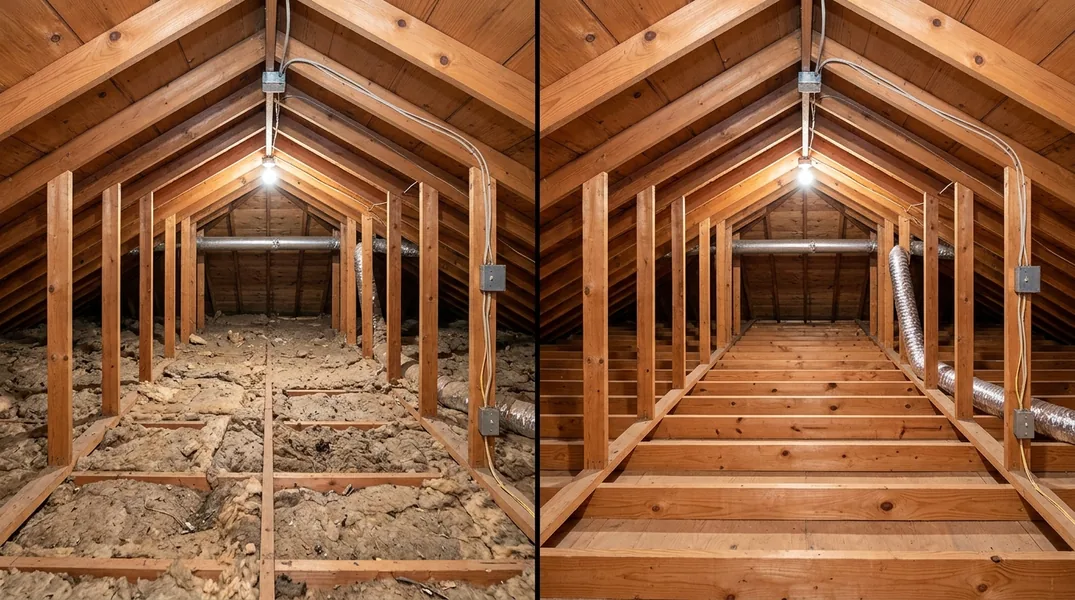
Is Spray Foam Insulation Worth It for Iowa City Homes?
When homeowners in Iowa City consider upgrading their attic insulation, the question of value quickly becomes central. Attic Spray Foam Insulation has gained popularity over the past decade, but is it truly worth the investment compared to traditional fiberglass batts or blown-in cellulose?
The honest answer depends on your specific situation. Spray foam delivers superior air sealing, which means fewer drafts, better temperature control, and potentially lower energy bills. For homes with irregular attic spaces, existing air leaks, or moisture concerns, spray foam often outperforms conventional insulation. However, the upfront cost is significantly higher. A typical attic project can run between $3,000 and $8,000 or more, depending on square footage and the type of foam selected. If you plan to stay in your Iowa City home for 10+ years and have energy bills that concern you, the return on investment becomes more compelling. Homeowners typically see energy savings of 15 to 30 percent, which can offset the initial expense over time.
Spray Foam Insulation Pros and Cons: A Balanced Look
Understanding both sides of the spray foam equation is essential before making your decision. The advantages are substantial. Spray foam creates an air-tight seal that blocks drafts at the source, something traditional batts cannot achieve. It also resists moisture intrusion, which is particularly valuable in Iowa's humid summers and long cold winters. The material adheres to any surface, making it ideal for sloped attic ceilings, around pipes, and in tight spaces where standard insulation would leave gaps.
On the downside, spray foam is expensive, and installation requires certified professionals with specialized equipment. The material can be sensitive to application conditions, and poor installation can lead to uneven coverage or inadequate expansion. Additionally, some homeowners report that spray foam takes time to cure fully, during which off-gassing can occur. If you have concerns about indoor air quality or chemical exposure, this is an important consideration. Open Cell Spray Foam Insulation tends to off-gas more noticeably than closed-cell varieties, though both types are generally considered safe once fully cured when installed by professionals. The decision ultimately hinges on whether the long-term energy savings and air-sealing benefits align with your budget and comfort level.
Spray Foam Off-Gassing: What You Need to Know
One of the most common concerns homeowners raise is spray foam off-gassing. When spray foam is first applied, it releases volatile organic compounds (VOCs) as the chemical components cure and harden. The smell can be noticeable and, for some people, bothersome. The good news is that off-gassing is temporary and most significant during the first 24 to 48 hours after application. Properly ventilating your home during and immediately after installation can minimize discomfort.
The safety question is more nuanced. Spray foam products used by insured installers are formulated to meet EPA and building code standards. Once fully cured, which typically takes a few days to a week depending on humidity and temperature, the foam becomes inert and does not continue releasing harmful chemicals into your home. However, the curing process does require caution. If you or your family members have respiratory sensitivities, asthma, or chemical sensitivities, discuss this with your installer before proceeding. Many professional contractors, including those serving Iowa City, can work around your schedule to minimize exposure and provide detailed post-installation ventilation guidance. If off-gassing remains a significant concern for your household, Open Cell Spray Foam Insulation typically off-gasses more than Closed Cell Spray Foam Insulation, though both are safe once cured.
Common Spray Foam Insulation Problems and How to Avoid Them
While spray foam is effective when applied correctly, several common problems can occur with poor installation or inadequate maintenance. Improper mixing of chemical components can result in foam that does not expand properly or cure correctly, leaving gaps in coverage. Overapplication can cause the foam to expand beyond its intended space, potentially damaging roof structures or creating pressure on walls. Conversely, underapplication leaves air pockets that defeat the purpose of air sealing.
Another issue is moisture entrapment. If spray foam is applied to damp surfaces or if moisture later gets trapped beneath the foam, it can lead to mold growth or wood rot over time. This is especially relevant in Iowa's climate, where humidity fluctuates seasonally. Professional installers address this by ensuring surfaces are dry before application and by selecting the appropriate foam type for your attic's moisture profile. Closed-cell foam, for instance, is more moisture-resistant than open-cell varieties. Additionally, some homeowners experience difficulty if they need to make repairs or modifications to their attic after foam installation, since the material is difficult to remove or cut through. Choosing an experienced contractor who understands these pitfalls and plans accordingly is your best defense. Iowa City Spray Foam Insulation has the expertise to navigate these challenges and deliver lasting results.
Is Spray Foam Insulation Safe? What the Research Shows
Safety concerns around spray foam often stem from misunderstandings about the curing process and the materials themselves. The primary chemicals in spray foam, isocyanates and polyols, undergo a chemical reaction when mixed that transforms them into a stable, inert solid. Once this reaction is complete, the foam poses no ongoing chemical hazard. The EPA and the Spray Polyurethane Foam Alliance (SPFA) have established guidelines for safe installation and use, and products meeting these standards are deemed safe for residential applications.
The real safety consideration is during installation. Workers applying spray foam must wear protective equipment and follow proper ventilation protocols to avoid inhaling fumes. Homeowners should vacate the premises during application and ensure adequate ventilation for 24 to 48 hours afterward. If you have young children, elderly family members, or pets with respiratory issues, plan your installation during a time when they can stay elsewhere temporarily. Pregnant women should also exercise caution and consult their healthcare provider. Beyond the curing period, spray foam does not release harmful substances into your home. It does not attract pests, does not degrade over decades, and does not become a safety hazard. When installed by certified professionals following industry standards, spray foam is a safe and effective insulation choice for most Iowa City homeowners.
Air Sealing vs. Full Foam: Which Strategy Fits Your Home?
Not every home needs a complete spray foam overhaul. Some properties benefit more from targeted air sealing combined with conventional insulation upgrades. Air sealing focuses on closing specific gaps and cracks where conditioned air escapes, such as around electrical outlets, ductwork penetrations, rim joists, and attic access hatches. This approach is less expensive than full foam application and can deliver significant energy savings if your primary problem is air leakage rather than inadequate insulation.
Full foam application, on the other hand, addresses both air sealing and insulation value simultaneously. It is the more comprehensive solution and works best in older homes with irregular attic geometry, homes with existing moisture issues, or homes where energy efficiency is a top priority. The choice depends on your current insulation levels, your budget, and your energy goals. A professional energy audit can reveal where your home is losing the most conditioned air and help you prioritize investments. If you are unsure whether air sealing alone or full foam is right for your property, Iowa City Spray Foam Insulation can assess your attic, explain the options, and provide a free estimate tailored to your needs. Call (319) 600-6306 to schedule a consultation and get personalized recommendations for your home.
Attic Spray Foam Insulation Cost in Iowa City: What to Budget
Understanding the financial investment required for spray foam helps you make a confident decision. Pricing for attic spray foam typically ranges from $1.50 to $3.50 per board foot, depending on whether you choose open-cell or closed-cell foam and the complexity of your attic layout. For a 1,000-square-foot attic, you might expect a total cost between $3,000 and $7,000 or more. Closed-cell foam costs more but offers higher R-value per inch and superior moisture resistance. Open-cell foam is more affordable but requires thicker application to achieve the same R-value.
When evaluating cost, factor in the potential energy savings. Many homeowners recoup their investment through reduced heating and cooling bills within 7 to 10 years, especially if they combine spray foam with other efficiency upgrades like air sealing and duct sealing. Some utility companies and energy efficiency programs offer rebates or incentives for insulation improvements, which can offset part of the expense. Additionally, improved comfort and reduced drafts add intangible value that many homeowners find worth the upfront cost. To get an accurate quote for your specific situation, contact Iowa City Spray Foam Insulation at (319) 600-6306 or request a free estimate online. Our team will assess your attic, discuss your goals, and provide transparent pricing with no hidden surprises.
Looking for a professional spray foam insulation contractor in Iowa City? Iowa City Spray Foam Insulation responds fast for all your spray foam insulation needs.
Get a Free Quote