Understanding Balloon Framing and Why It Matters for Attic Insulation
Many homeowners in Iowa City live in charming older homes built with balloon framing, a construction method that was common in residential buildings constructed before the 1950s. Balloon framing is characterized by continuous wooden studs that run from the foundation all the way up through multiple stories to the roof line, without the horizontal fire stops that modern platform framing includes. This architectural style creates a unique challenge when it comes to insulation, particularly in attics where air can move freely through wall cavities and compromise your home's energy efficiency.
The problem with balloon framing becomes especially apparent when homeowners attempt to use traditional insulation methods. Settled attic batts, which were the standard solution for decades, simply cannot address the continuous cavities that balloon framing creates. These gaps allow warm air to escape in winter and cool air to leak out in summer, making your heating and cooling systems work harder and driving up your energy bills. If you own an older home in Iowa City and have noticed higher-than-expected utility costs, balloon framing combined with inadequate insulation may be the culprit.
Spray Foam vs Blown-In Insulation: Which Works Better for Older Homes
When comparing spray foam vs blown-in insulation for homes with balloon framing, the differences become immediately clear. Blown-in insulation, typically made from cellulose or fiberglass, works by being mechanically blown into wall cavities and attic spaces. While this method can be effective in newer homes with standard framing, it struggles significantly in older construction. Blown-in materials settle over time, creating gaps and voids that compromise performance. In balloon-framed homes, these materials often miss critical areas entirely, flowing down into wall cavities rather than staying where you need them in the attic.
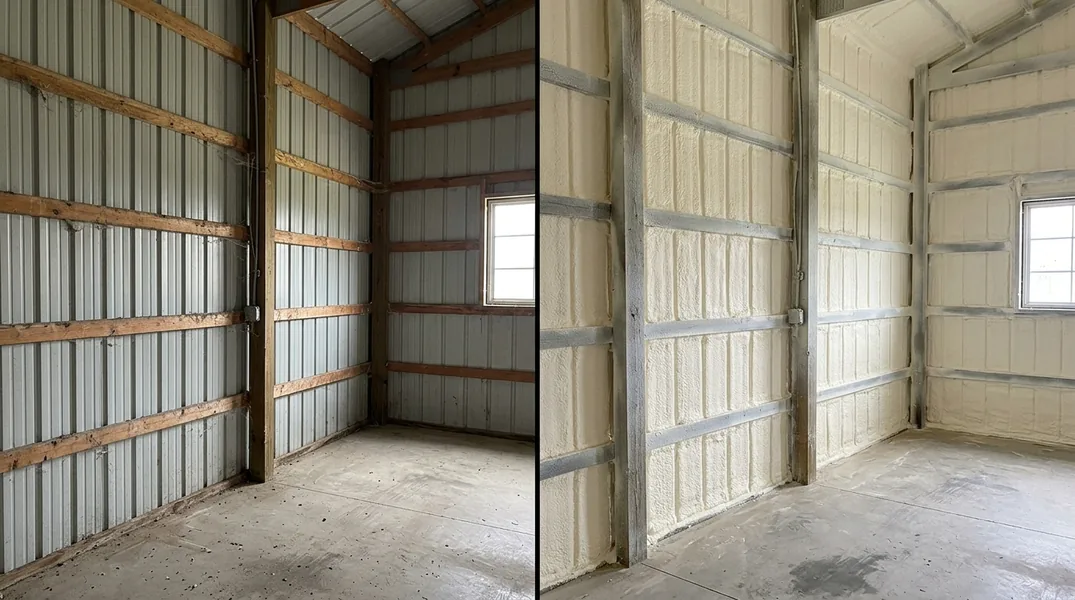
Attic Spray Foam Insulation addresses these limitations by expanding and adhering to every surface it contacts. Unlike blown-in insulation, spray foam creates an air seal that prevents thermal bridging and air leakage. This expansion capability is crucial in balloon-framed homes because it fills irregular cavities, gaps around framing members, and areas that would otherwise remain uninsulated. The result is a continuous thermal barrier that truly seals your attic against the outdoor elements.
Spray Foam vs Fiberglass: Why Fiberglass Falls Short in Attics
Fiberglass batts have been the go-to insulation choice for generations, but when you examine spray foam vs fiberglass in the context of attic insulation, spray foam emerges as the superior option for most homes, especially older ones. Fiberglass batts rely on air pockets trapped within the material to provide insulation value. However, this approach has inherent weaknesses. Batts can be installed incorrectly, leaving gaps around electrical wiring, HVAC ducts, and structural members. They also compress over time, reducing their R-value effectiveness. In attics exposed to temperature fluctuations and moisture, fiberglass degrades faster than homeowners expect.
Spray foam, whether Closed Cell Spray Foam Insulation or Open Cell Spray Foam Insulation, doesn't suffer from these drawbacks. Closed-cell foam provides a higher R-value per inch and creates a vapor barrier that protects against moisture infiltration, making it ideal for attics in humid climates. Open-cell foam offers excellent sound dampening and is more affordable, making it a solid choice for homeowners prioritizing cost-effectiveness without sacrificing performance. Both types expand to fill every nook and cranny, ensuring consistent coverage that fiberglass simply cannot match.
Spray Foam vs Cellulose: Performance in Settled Attic Environments
Cellulose insulation is often marketed as an eco-friendly alternative to fiberglass, but when comparing spray foam vs cellulose, the performance gap widens significantly in attic applications. Cellulose is made from recycled paper fibers and is blown into cavities much like fiberglass. While it does offer a slightly higher R-value per inch than fiberglass, cellulose shares the same fundamental problem: it settles. Over time, cellulose compacts due to gravity and vibrations from HVAC systems, creating voids at the top of wall cavities and between attic joists. These settled areas lose their insulating ability, and homeowners often don't realize their attic's performance has degraded until they see a spike in their heating or cooling bills.
Additionally, cellulose is hygroscopic, meaning it absorbs moisture from the air. In attics with inadequate ventilation or moisture problems, this can lead to mold growth and material degradation. Spray foam, by contrast, doesn't settle and resists moisture absorption. It maintains its R-value indefinitely and actually improves your home's moisture control by creating a sealed environment. For homeowners in older Iowa City properties dealing with settled attic batts or considering cellulose as a replacement, spray foam represents a long-term investment that delivers consistent performance year after year.
What Is the Best Insulation for Attic: A Comprehensive Comparison
Determining the best insulation for attic depends on several factors including your home's age, local climate, budget, and specific structural challenges. For homes with standard construction and modern framing, blown-in insulation might suffice. However, for older homes with balloon framing, irregular cavities, or a history of energy loss, spray foam is the clear winner. The best insulation for attic in challenging situations is one that addresses air leakage, maintains consistent R-value, and adapts to your home's unique geometry. Spray foam checks all these boxes and then some.
The decision also depends on whether you're doing a full attic renovation or addressing specific problem areas. If you're replacing settled attic batts in a balloon-framed home, spray foam eliminates the root cause of energy loss rather than simply adding more of the same ineffective material. Many homeowners discover that spray foam's superior air-sealing properties reduce their reliance on HVAC systems, offsetting the higher upfront cost through energy savings. To determine the best solution for your specific situation, contact Iowa City Spray Foam Insulation at (319) 600-6306 for a free estimate. Our team can assess your attic's current condition and recommend the most cost-effective approach.
Attic Spray Foam Insulation Cost in Iowa City: What to Budget
Understanding pricing for attic spray foam insulation helps homeowners make informed decisions. Spray foam costs more upfront than blown-in insulation or fiberglass batts, typically ranging from 1.50 to 3.50 dollars per board foot depending on the type of foam and your attic's size and complexity. For a typical 1,500-square-foot attic, you might expect to invest between 3,000 and 7,000 dollars. While this seems substantial, it's important to consider the long-term value. Spray foam's durability means you won't need to replace or add insulation again in 20 or 30 years, unlike settled blown-in materials that require periodic top-ups.
Energy savings typically offset the higher initial investment within 5 to 10 years for most homeowners. Reduced heating and cooling costs, combined with potential tax credits for energy-efficient home improvements, make spray foam an economically sound choice. Iowa City Spray Foam Insulation offers transparent pricing with no hidden fees. To get an accurate quote for your home, call us at (319) 600-6306 or visit our website at https://iowa-city-spray-foam.com to request a free estimate. We'll evaluate your attic's current condition and provide a detailed breakdown of costs and expected energy savings.
Looking for a professional spray foam insulation contractor in Iowa City? Iowa City Spray Foam Insulation responds fast for all your spray foam insulation needs.
Get a Free Quote